
You've got a long run on Saturday, speedwork on Tuesday, and a family dinner squeezed between school pickup and your evening meeting. A fixed menu doesn't know any of that. It might give you the same carbohydrate-heavy breakfast before an easy jog as before a demanding session, then leave you scrambling for recovery food when the workout ends.
A useful runner meal plan is less like a rigid seven-day diet and more like a reusable training tool. Carbohydrate portions rise with workload, protein stays present for repair, and food choices change when your stomach has four hours to digest a meal versus only forty-five minutes. The result is a plan that supports the run on your calendar, while still working in a busy household.
Why Most Runner Meal Plans Miss the Mark
A runner can eat the same breakfast, lunch, dinner, and snacks through a rest day, an easy aerobic run, a tempo workout, and a long run. The routine may look organized, yet it overlooks the main planning variable: training load changes from day to day. A fixed menu is likely to underfuel the hardest session or provide more food than an easier day requires.
Carbohydrate should move first. Guidance for endurance athletes commonly places intake around 5–7 g/kg/day for moderate daily exercise, 6–10 g/kg/day for one to three hours of moderate-to-high intensity work, and 8–12 g/kg/day during the 36–48 hours before a prolonged event. These ranges appear in the evidence review on carbohydrate intake and endurance performance. One menu cannot fit all three situations well. Use the ranges as planning anchors, then adjust portions to the actual session.
Easy days still need enough food. Recovery continues after a lighter run, glycogen stores need replenishing, and the next demanding workout may be close. Reduce or increase starch portions and snacks as needed, rather than changing the entire menu or treating rest as a reason to undereat.
The stomach has a training calendar too
A meal that feels fine before an easy morning run may cause trouble before intervals. High-fat and high-fiber foods generally digest more slowly and may increase gastrointestinal discomfort during fast or jostling workouts. REI's trail-running nutrition guidance distinguishes a full meal taken roughly 2–4 hours before running from a smaller carbohydrate snack eaten about 30–60 minutes beforehand.
Oatmeal with seeds, nut butter, and fruit can work when there is plenty of time. With only forty-five minutes, toast with jam, a banana, or a sports drink may be easier to tolerate. The useful question is whether the food will digest comfortably before that particular run, not whether it fits a generic definition of healthy eating.
Practical rule: Match the meal to the workout and the digestion window, not to a generic idea of what runners are supposed to eat.
Build around the calendar
At the start of each week, label sessions as rest, easy, moderate, quality, long, or race-specific. Assign larger carbohydrate portions to workouts that depend most on glycogen. Keep a familiar protein source and some produce throughout the week, while letting starch portions flex with demand. This turns the meal plan into a reusable template rather than a fixed seven-day menu.
The same approach helps expose underfueling before it affects training. In one international cohort, only 50% of triathletes, 30% of cyclists, and 15% of marathon runners reported consuming the recommended 60–90 g of carbohydrate per hour during long events, according to the review cited above. Understanding fueling does not guarantee execution. Put the reminder in the plan before the run, with a food and timing choice your stomach has already tested.
Carb Targets That Move With Your Training Load
A fixed plate size cannot cover an easy jog, a long run, and a race-specific workout equally well. Set carbohydrate portions from body weight and the day's training demand, then adjust them as the schedule changes. The goal is a reusable system, not a rigid seven-day menu.
For moderate daily exercise, practical guidance commonly uses 5–7 g of carbohydrate per kilogram of body weight per day. Heavier training may call for 6–10 g/kg/day, while the final 36–48 hours before a prolonged event may require 8–12 g/kg/day to maximize muscle glycogen stores. These ranges are summarized in this review of nutritional strategies for endurance athletes.
The table applies those ranges to a 70 kg runner. Use the figures as planning anchors, not a requirement to hit one exact number every day.
| Training Load | g/kg Body Weight | 70 kg Example (g) | Sample Food Sources |
|---|---|---|---|
| Moderate daily exercise | 5–7 g/kg | 350–490 g | Oats, rice, pasta, bread, fruit, potatoes |
| Moderate-to-high training | 6–10 g/kg | 420–700 g | Larger starch portions, carbohydrate snacks, sports fuel |
| Prolonged-event preparation | 8–12 g/kg | 560–840 g | Frequent low-fiber carbohydrate meals, rice, pasta, bread, juice |
Scale portions, not the entire menu
Keep the same meal framework across the week, then change the starch serving. On an easy day, use less rice, pasta, potatoes, or bread. Before or after a hard session, add another carbohydrate source, such as fruit with oats or bread alongside a rice bowl. A snack can fill that gap when adding another full meal is impractical.
Protein usually stays steadier than carbohydrate. Include eggs, Greek yogurt, chicken, fish, tofu, beans, or dairy alternatives across the week. Fat still belongs in a balanced diet, but a lower-fat meal near demanding training can be easier to digest because fat may slow stomach emptying.
Use food you can portion by sight
A calculator is not necessary at every meal. Build the day from familiar combinations:
- Breakfast: oats or toast plus fruit, with yogurt, eggs, or milk.
- Lunch: rice, pasta, potatoes, bread, or a grain bowl with protein and vegetables.
- Dinner: a larger starch serving after a hard session, a moderate serving after an easy one.
- Snacks: bananas, pretzels, bagels, cereal, yogurt, or a smoothie.
Weeknight meals can follow the same template. This practical chicken and rice option provides a useful base. Add rice, bread, or fruit when the next session is long or demanding. Keep the protein and vegetables similar, then reduce the starch when the following day is an easy recovery run. Adjust further if a larger portion repeatedly causes GI discomfort.
Pre-Run and Post-Run Timing That Works
A meal that feels fine at dinner can sit heavily before a run. Match the portion, ingredients, and timing to the workout, then repeat the combination that your stomach handles well.
Three to four hours before the run
Choose a carbohydrate-rich meal with moderate protein and relatively low fat and fiber. Oatmeal with banana and Greek yogurt, a rice bowl with chicken and cooked greens, or toast with a small amount of nut butter and honey can all work.
Controlled trials found that moderate-to-high intensity exercise lasting 35–40 minutes improved when a meal was consumed 3 hours rather than 6 hours before exercise, as described in this PubMed review of pre-exercise feeding. A low appetite does not require forcing down a large breakfast, but a meal from six hours earlier may leave a quality session underfueled.
Use foods you already tolerate. Large amounts of fried food, heavy cream, very spicy dishes, and bulky high-fiber ingredients may fit elsewhere in the day but can create problems before running. If dairy causes symptoms, choose a tolerated alternative. If beans disrupt your stomach, save them for after training.
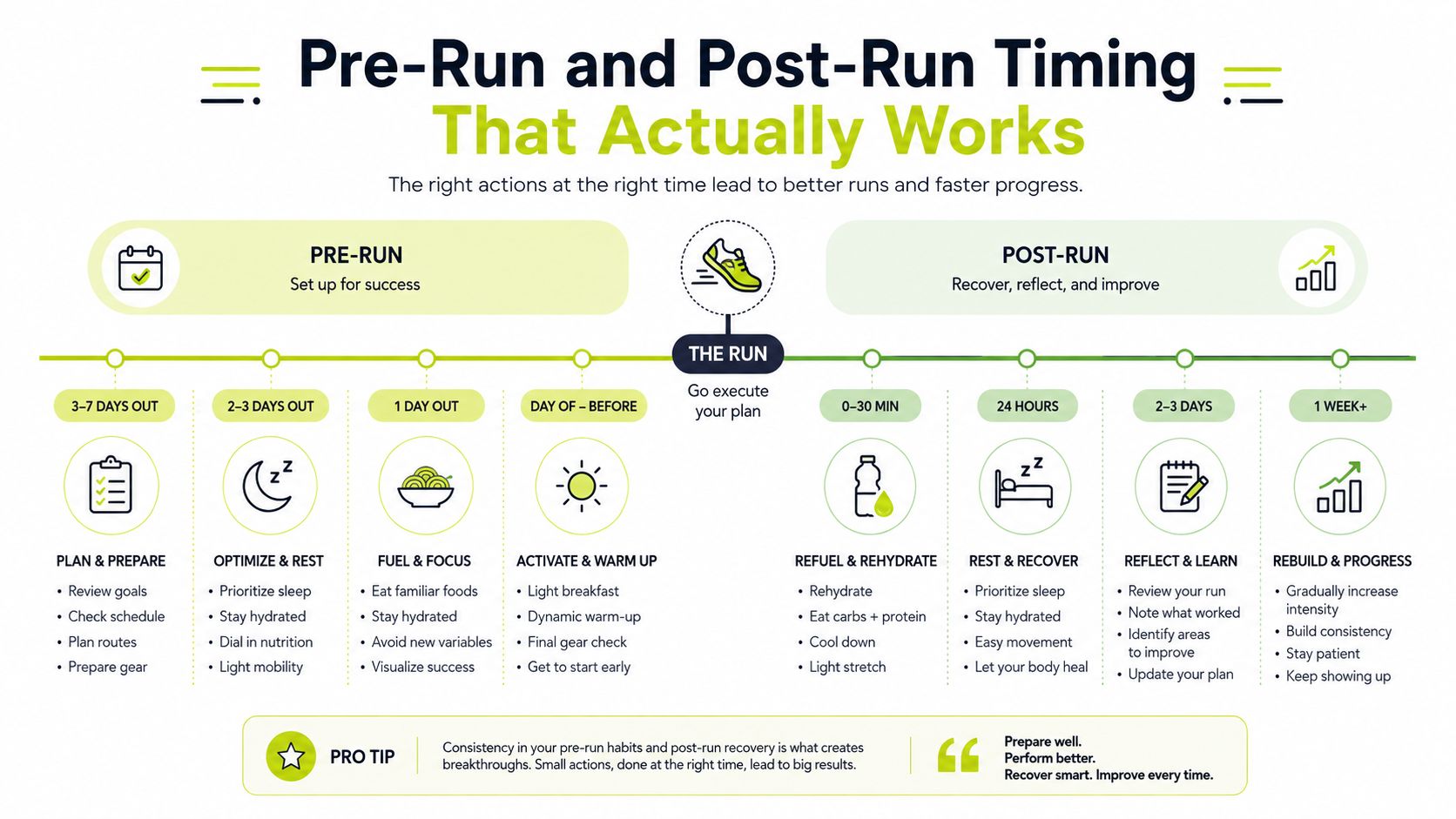
Thirty to sixty minutes before
Treat this snack as a top-up, not a second breakfast. Pick a small, low-fiber carbohydrate source that you have tested, such as a banana, half a bagel with jam, a rice cake with honey, dates with water, or a sports gel. The amount depends on your tolerance, the earlier meal, and the workout ahead.
Reviews report no performance penalty when carbohydrate is consumed within 60 minutes of exercise. During exercise, carbohydrate becomes more useful as duration extends beyond 2 hours, with some evidence of benefit during 90–120 minute efforts. For marathon-plus efforts, the commonly cited technical benchmark is up to 90 g/hour, although drinking or eating beyond what feels comfortable can increase gastrointestinal discomfort without improving performance. Practice this approach during training rather than introducing it on race morning.
A 16–21 km race generally does not show meaningful performance improvement from gels alone, so distance should shape the plan. A small carbohydrate intake may still feel useful, particularly after a demanding training block. Keep the choice tied to the event and your GI response.
After the run
Begin recovery with carbohydrate and protein soon after a long or hard session. Chocolate milk, a banana-and-whey smoothie, rice with salmon, or a turkey wrap can cover that need when a full meal is not ready.
If dinner will be late, have a recovery snack instead of waiting several hours. Glycogen restoration continues after the run, and skipping a carb-forward evening meal can make the following morning feel harder. After longer or hotter sessions, include fluids and electrolytes according to sweat loss and conditions. Avoid drinking far beyond thirst if that leaves your stomach sloshing.
For a household meal, portion the same base differently rather than cooking separate dishes. This simple post-run meal idea can be prepared ahead, with more carbohydrate for the runner and a smaller portion for other family members. Use the same timing template across the week, then adjust the snack and serving size to match the session.
A 7-Day Sample Runner Meal Plan You Can Reuse
Consider a runner weighing between 65 and 70 kg, with an easy run, tempo workout, long run, hill repeats, cross-training, and rest days. The plan below isn't meant to prescribe exact daily totals. It shows how to expand carbohydrate portions around demanding sessions while keeping family meals recognizable.
| Day | Workout | Breakfast | Lunch | Dinner | Snacks | Carb Load (g) |
|---|---|---|---|---|---|---|
| Monday | Rest | Eggs, toast, fruit | Chicken salad with potatoes | Salmon, vegetables, moderate rice | Yogurt, apple | Qualitative, lower |
| Tuesday | Tempo session | Oats, banana, Greek yogurt | Turkey sandwich, pretzels, fruit | Pasta with chicken and tomato sauce | Bagel with jam, chocolate milk | Qualitative, higher |
| Wednesday | Easy run | Yogurt, granola, berries | Rice bowl with tofu and vegetables | Tacos with rice and salad | Banana, crackers with cheese | Qualitative, moderate |
| Thursday | Hill repeats | Toast with honey, eggs | Pasta salad with chicken | Stir-fry with a generous rice serving | Cereal with milk, fruit | Qualitative, higher |
| Friday | Cross-training | Smoothie with banana, oats, and milk | Baked potato with tuna and vegetables | Homemade pizza with salad | Pretzels, yogurt | Qualitative, moderate |
| Saturday | Long run | Bagel or pancakes with honey and fruit | Turkey wrap with extra bread or rice | Chicken, pasta, and cooked vegetables | Pre-run snack, recovery smoothie | Qualitative, highest |
| Sunday | Rest or gentle recovery | Oatmeal with fruit | Quinoa bowl with eggs or tofu | Roast chicken, sweet potato, green beans | Hummus with crackers, fruit | Qualitative, lower |
The “Carb Load” column stays qualitative because the exact amount depends on body weight, session duration, and the rest of the day's intake. Use the carbohydrate ranges from the earlier section rather than pretending a sample menu can calculate an individual requirement.
Three meals that pivot easily
The breakfast pivot is simple. Before tempo or hills, choose lower-fiber oats, toast, a bagel, or a banana if those foods digest well for you. On a rest morning, add more seeds, nuts, or high-fiber fruit if your stomach tolerates them.
Lunch can stay as a chicken, tofu, or tuna bowl. Add rice, bread, or fruit after a demanding morning; use a smaller starch portion after rest. Dinner follows the same logic. Pasta, rice, potatoes, or pizza can all fit, but the runner takes the larger carbohydrate serving on a long-run eve while other family members choose their own portion.
Dairy and beans are nutritious but can be troublesome before fast running for some people. Keep alternatives available, such as lactose-free yogurt, eggs, tofu, or a simpler sandwich. You can find additional meal building blocks in the Mealdill recipe collection.
Shift the whole template when life shifts the workout. If Tuesday's tempo moves to Wednesday, move the higher-carbohydrate breakfast and dinner with it. The point is not to protect the weekday labels. It's to keep the food aligned with the actual training stress.
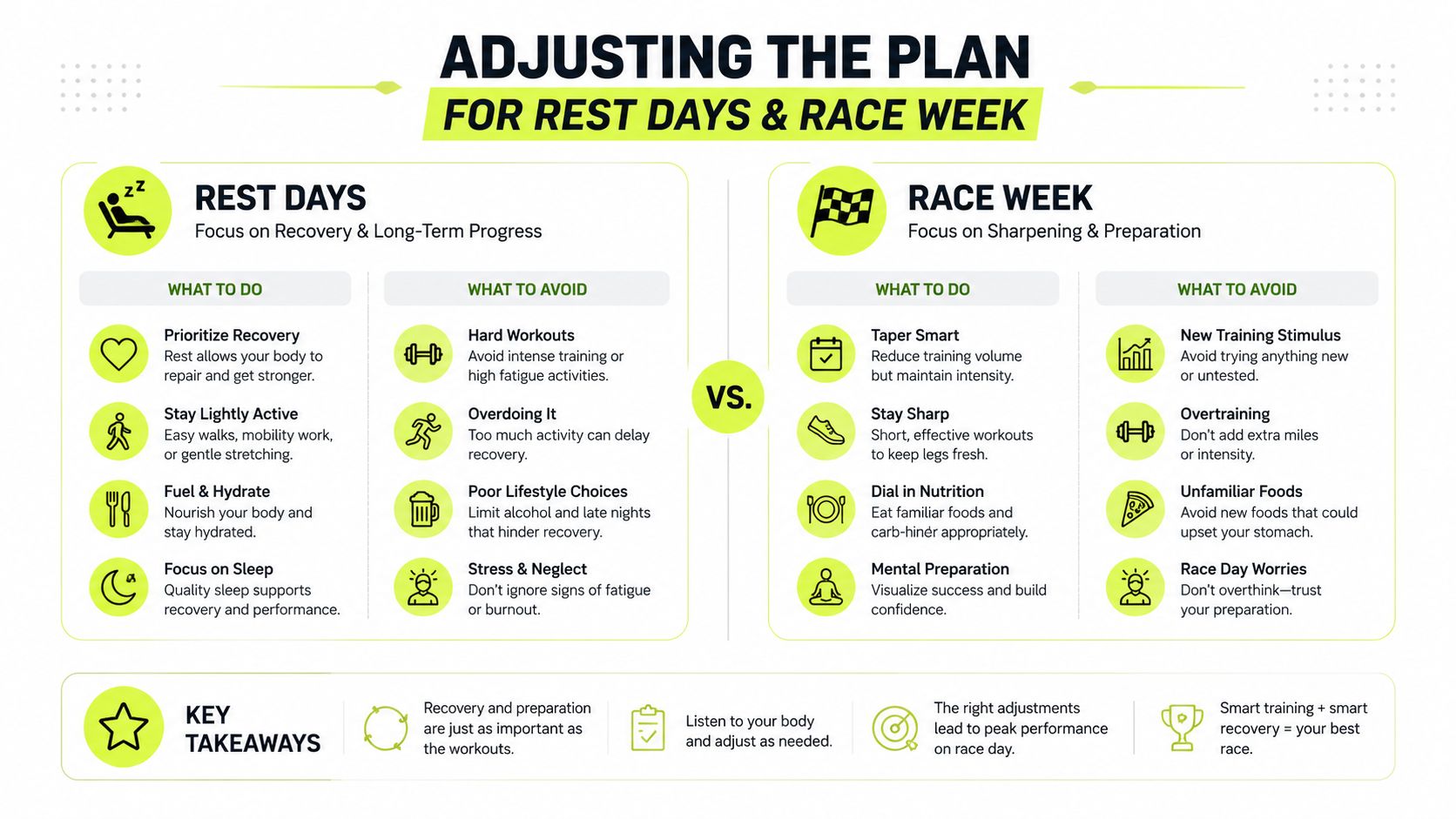
Adjusting the Plan for Rest Days and Race Week
A runner meal plan should change with the work on the schedule. Keep the same core ingredients, then adjust portion size, timing, fiber, and fat according to whether the day includes rest, recovery, ordinary training, or a demanding session.
On a true rest day, keep protein, vegetables, fluids, and regular meals consistent. If appetite drops, reduce the largest starch serving rather than skipping meals or eating too little overall. Active recovery usually sits between rest and training, especially when another quality session is coming soon.
An ordinary training day needs carbohydrate at meals, with a snack around the run when the gap between meals and training is long. Hard workouts and double-session days warrant the largest portions and a simple recovery meal. Food should match the work required, then support repair afterward.
The race-week shift
For a prolonged event, raise carbohydrate intake during the final 36–48 hours to support muscle glycogen stores. As noted earlier, the preparation target is 8–12 g/kg/day. Spread that intake across breakfast, lunch, dinner, and snacks instead of forcing it into one oversized meal. This approach gives the stomach more chances to tolerate the increase.
During the final day, choose familiar, lower-fiber foods if bulky meals cause symptoms. Rice, pasta, bread, potatoes without much added fat, bananas, cereal, and tolerated dairy alternatives may sit more comfortably than large servings of beans, raw vegetables, or rich sauces. GI tolerance outranks a theoretically perfect menu.
Race morning should feel familiar
The final pre-race meal commonly falls within 1–4 g/kg of carbohydrate during the last 1–4 hours before the start, as described in the earlier endurance fueling guidance. Use a breakfast tested in training, such as toast and banana, oats with a small amount of honey, or a bagel with jam.
Race week is for repeating what works. Do not introduce a new gel, oversized breakfast, or unfamiliar sports drink. A menu can meet its fueling target and still fail if it sends the runner toward an urgent bathroom stop. Keep the reusable template, shift portions with the training load, and make only changes already proven during practice.
Family-Friendly Tweaks and a Smart Shopping List
A runner meal plan shouldn't require a separate dinner for every person at the table. Cook one base meal, then separate the components so each person can build a suitable plate.
For example, serve rice, chicken, roasted vegetables, and sauce separately. The runner can take a larger rice portion before a long run, while someone else chooses more vegetables or protein. Tacos, pasta bowls, baked potatoes, and sheet-pan meals work especially well because each person can adjust portions without changing the main cooking process.
Picky eaters often accept familiar protein swaps more readily than unfamiliar recipes. Use eggs, chicken, fish, yogurt, tofu, beans, or cheese according to preference. Offer vegetables roasted, steamed, blended into sauce, or served raw, rather than insisting on one presentation. Keep sauces on the side when spice or richness creates problems before running.
Shop by aisle
| Aisle | Items | Quantity for the Week | Runner-Specific Notes |
|---|---|---|---|
| Produce | Bananas, apples, berries, potatoes, sweet potatoes, spinach, carrots, broccoli, salad greens | Buy enough for daily meals plus run-day snacks | Choose extra bananas, bread, or potatoes for demanding days |
| Proteins | Eggs, chicken, salmon, tuna, tofu, beans, turkey | Plan one protein source for each main meal | Keep quick options available after late workouts |
| Grains and starches | Oats, rice, pasta, bread, bagels, tortillas, cereal, pretzels | Stock several flexible carbohydrate bases | Cook extra rice or pasta for next-day lunches |
| Dairy or alternatives | Greek yogurt, milk, lactose-free yogurt, cheese, soy alternatives | Match household use and tolerance | Use familiar options before quality sessions |
| Pantry | Honey, jam, olive oil, nut butter, salsa, tomato sauce, crackers | Refill the items used in multiple meals | Keep low-fiber pre-run choices visible |
| Race-week extras | Sports drink, gels, simple cereal, white bread, bananas | Buy only what you've practiced | Test each item during training |
The quantities should follow your household, not an invented universal serving count. For one runner, buy enough for the listed meals and snacks. For a family, multiply the shared base ingredients while keeping runner-specific snacks separate.
Use a recipe library as a set of interchangeable blocks. A chicken recipe can become a rice bowl, wrap, or pasta dinner. A favorite soup can stay on a rest day, while the same cooked grain becomes the foundation for a higher-carbohydrate meal before a long run. This family-friendly recipe option can slot into that system without forcing you to redesign the week.
Save Your Plan as a Template and Stop Replanning
The plan becomes useful when you stop rebuilding it from scratch. Create one base week with slots for rest, easy, moderate, quality, and long-run days. Then keep the structure while changing the meals, portions, and snacks as the training block develops.
A practical naming system makes the shift obvious:
- Runner, Base Phase: ordinary training with flexible portions.
- Runner, Build Phase: larger carbohydrate servings around quality and long sessions.
- Runner, Taper: less total training, with race preparation meals kept familiar.
- Runner, Race Week: carbohydrate-focused final preparation and practiced race-morning food.
Tag meals by purpose rather than by weekday. “Easy breakfast” might mean yogurt and granola. “Quality breakfast” might mean toast, banana, and a familiar protein source. “Long-run dinner” can identify the meals that provide more carbohydrate without relying on high-fat ingredients.

Make the template respond to real life
If Saturday's long run moves to Sunday, duplicate the week and move the tagged meals with the session. If a hard workout becomes an easy run, swap the higher-carbohydrate dinner for a moderate version rather than deleting the meal entirely. Leave notes beside foods that cause bloating, foods the children reject, and breakfasts that work reliably before early starts.
Attach a shopping list to each version. That way, the race-week list can include tested fuel while the rest-day version emphasizes the foods already in your pantry. The plan remains flexible, but the decisions happen once instead of every evening.
A meal-planning workspace such as Mealdill can store recipes, organize meals, save reusable templates, and turn the selected plan into a shopping list. The important feature isn't automation for its own sake. It's the ability to preserve a structure that already matches your training and household.
Save, duplicate, swap, tag, shop, repeat.
Mealdill lets you organize recipes, build reusable meal-plan templates, and create aisle-sorted shopping lists, so your runner meal plan can follow the training week without adding nightly decisions. Visit Mealdill to set up a flexible base week, adapt portions around your runs, and keep the whole household working from the same plan.